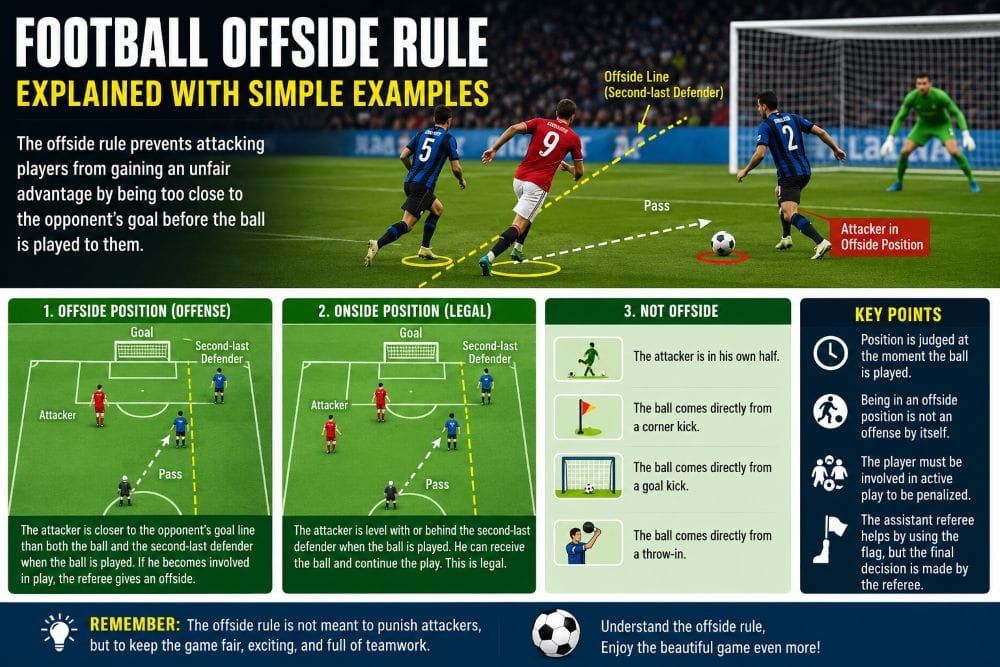
Football Offside Rule helps keep football fair and exciting. Every football fan should understand this important rule. However, many people still find it confusing. Some fans think every forward pass creates an offside. Others believe any player standing near the goal becomes offside. That is not true. Therefore, learning this rule makes every match more enjoyable. This guide explains everything in easy words. It also uses simple examples that anyone can understand.
What Is the Football Offside Rule?
The Football Offside Rule explains when an attacking player gains an unfair advantage by standing too close to the opponent’s goal before receiving the ball. However, simply standing in an offside position does not break the rule. A player must also become involved in active play. For example, the player may receive the ball, challenge an opponent, or block the goalkeeper’s view. If none of these things happen, the referee allows play to continue. Therefore, position alone never decides the final call. The player’s action also matters.
Why the Offside Rule Exists in Football
Football needs rules that create balance between attack and defense. Therefore, the offside rule stops attackers from waiting beside the goalkeeper for an easy goal. Without this rule, matches would lose excitement and teamwork. Players would simply stay near the goal instead of building attacks together. As a result, defenders would struggle to stop scoring chances. The rule encourages passing, movement, and smart tactics. It also rewards teams that create opportunities through skill instead of taking unfair shortcuts. Because of this, football stays competitive and entertaining.
Football Offside Rule and Fair Play
The Football Offside Rule protects fair play in every match. Football rewards teamwork, timing, and intelligent movement. Therefore, every attacking player must think carefully before making a run. A striker cannot simply wait behind every defender. Instead, the player must time the run perfectly. Defenders also work together by holding a defensive line. As a result, both teams use strategy instead of luck. This balance makes football more enjoyable for players, coaches, officials, and fans around the world.
Basic Terms Every Football Fan Should Know
Before learning offside, every fan should understand a few basic football terms. The attacker tries to score goals. The defender protects the goal. The goalkeeper guards the penalty area. Meanwhile, the assistant referee watches the touchline carefully. This official raises the flag after spotting an offside offense. The second-last defender also plays an important role because referees compare the attacker’s position with this player. Once you understand these simple terms, the offside rule becomes much easier to follow during live matches.
How Referees Judge an Offside Position
Referees do not guess when making an offside decision. Instead, they carefully watch the exact moment when a teammate passes the ball. At that instant, they compare the attacker’s position with the ball and the second-last defender. If the attacker stands closer to the goal line than both, the official continues watching. However, the referee still waits to see whether the player joins active play. Therefore, good timing and careful observation help officials make accurate decisions during fast football matches.
Football Offside Rule with Simple Examples
The Football Offside Rule becomes much easier when you look at simple examples. Imagine a striker stands behind every defender before a teammate passes the ball. The striker then receives the pass and scores. In this case, the referee usually gives an offside decision. Now imagine another situation. The striker stays level with the second-last defender before the pass. Then the striker runs forward, receives the ball, and scores. This goal counts because the player started from a legal position. Therefore, the exact moment of the pass always matters more than where the player finishes the run.
When a Player Is Not Offside
Many fans think every player near the goal stands offside. However, football does not work that way. A player cannot become offside inside their own half. Likewise, a player does not become offside when receiving the ball directly from a goal kick, a corner kick, or a throw-in. These situations follow different rules. Furthermore, a player who stands in an offside position but never touches the ball or affects an opponent usually avoids punishment. Therefore, referees always study the full situation before making a final decision.
Common Mistakes Fans Make About Offside
Many supporters misunderstand the offside rule because football moves very quickly. Some believe a player becomes offside after receiving the ball. In reality, officials check the position at the exact moment the teammate passes the ball. Others think any player standing behind defenders breaks the rule. That idea is also incorrect. The player must take part in active play before the referee stops the match. Therefore, watching slow-motion replays often helps fans understand why officials make certain decisions during difficult situations.
Football Offside Rule in Fast Counterattacks
The Football Offside Rule plays a huge role during fast counterattacks. Many teams attack with great speed after winning the ball. Therefore, forwards must time every run perfectly. Even one step too early can create an offside offense. At the same time, defenders often move forward together to catch attackers beyond the defensive line. This tactic requires excellent teamwork and communication. As a result, every second matters during a counterattack. Smart players watch both the ball and the defenders before starting their runs.
How Assistant Referees Apply the Football Offside Rule
Assistant referees play an important role in every football match. They stay close to the touchline and move with the last defender throughout the game. This position gives them the best view of attacking runs. When they believe an offside offense has happened, they usually wait for the attack to develop before raising the flag. This short delay helps avoid stopping legal attacks too early. Meanwhile, the main referee makes the final decision after considering every part of the play. Therefore, teamwork between match officials helps produce fair and accurate results.
Football Offside Rule and VAR Decisions
The Football Offside Rule became even more accurate after VAR entered football. Before VAR, assistant referees made every decision with only their eyes. Sometimes they made mistakes because football moves very fast. However, VAR gives officials another chance to review close situations. The video team checks the exact moment of the pass. Then they compare the attacker’s position with the defenders. If the player breaks the rule, the referee changes the decision. If the player stays onside, the goal stands. Therefore, VAR helps reduce mistakes and increases fairness. Although reviews take extra time, they help officials make better decisions in difficult moments.
Famous Offside Moments in Football History
Football history includes many unforgettable offside moments. Some famous goals disappeared because the scorer stood just a few inches beyond the last defender. Other decisions created long debates among players, coaches, and fans. However, these moments also helped people understand the importance of the rule. Every close decision reminds teams that perfect timing matters. As technology improved, many controversial calls became easier to explain. Therefore, football continues to become more accurate while keeping the excitement of close matches alive.
Football Offside Rule in Youth Football
The Football Offside Rule also helps young players learn good football habits. Youth coaches teach players how to move at the right moment instead of waiting near the goal. As a result, children develop better positioning, teamwork, and decision-making skills. They also learn to watch both the ball and the defenders before making a run. These lessons prepare them for higher levels of football. Therefore, understanding offside at a young age creates smarter players who enjoy the game even more.
How Players Avoid Offside During Matches
Professional footballers practice movement every day. They constantly watch the defensive line before making forward runs. At the same time, they communicate with teammates who control the ball. Many attackers begin their run only after the pass starts. This timing helps them stay onside while keeping their speed. Meanwhile, experienced midfielders wait for the perfect moment before delivering the pass. Because both players work together, they create dangerous attacks without breaking the rules.
Football Offside Rule and Goal Scoring Chances
The Football Offside Rule changes the way teams create scoring opportunities. Attackers cannot rely only on speed. Instead, they must combine smart movement with excellent timing. Coaches design attacking patterns that help forwards escape defenders without moving offside. As a result, every successful goal often comes from teamwork instead of individual position alone. The best attacking teams understand when to pass, when to run, and when to wait. Therefore, good timing often creates the biggest scoring chances.
Offside Myths You Should Stop Believing
Many football fans still believe several myths about offside. Some think every forward pass creates an offense. Others believe any player standing near the goalkeeper becomes offside. Neither idea is correct. Football officials always consider the full situation before making a decision. They check the player’s position, the exact time of the pass, and whether the player joins active play. Therefore, understanding the real rule helps fans enjoy matches without confusion.
Football Offside Rule for Beginners
The Football Offside Rule may look difficult at first. However, most beginners understand it after watching a few simple examples. The easiest way to learn involves following the second-last defender before every pass. Then watch the attacking player’s movement. If the attacker starts the run at the correct moment, play continues. If the attacker gains an unfair advantage, the referee stops the attack. Therefore, regular practice makes this rule much easier to understand.
How Coaches Teach the Offside Rule
Coaches use simple drills to explain offside during training sessions. They place defenders in one line and ask attackers to time their runs carefully. Then they repeat the same exercise many times. Players quickly learn the difference between early and well-timed movement. Coaches also use match videos to explain real situations. As a result, players improve their decision-making and avoid unnecessary mistakes during competitive matches.
Football Offside Rule in Modern Football
The Football Offside Rule remains one of the most important parts of modern football. Teams now play with greater speed than ever before. Therefore, attackers and defenders must think quickly. Technology also supports referees with better decisions. At the same time, coaches create advanced tactics that depend on perfect timing. Although football continues to change, the offside rule still protects fairness and keeps every match competitive.
Final Thoughts on the Offside Rule
The offside rule may seem confusing in the beginning. However, it becomes much easier after learning the basic ideas and watching real examples. Every football fan benefits from understanding how referees make these decisions. Good knowledge also makes every match more enjoyable. Whether you watch local football or the biggest international tournaments, this rule appears in almost every game. Therefore, learning it today helps you enjoy football with greater confidence for many years.