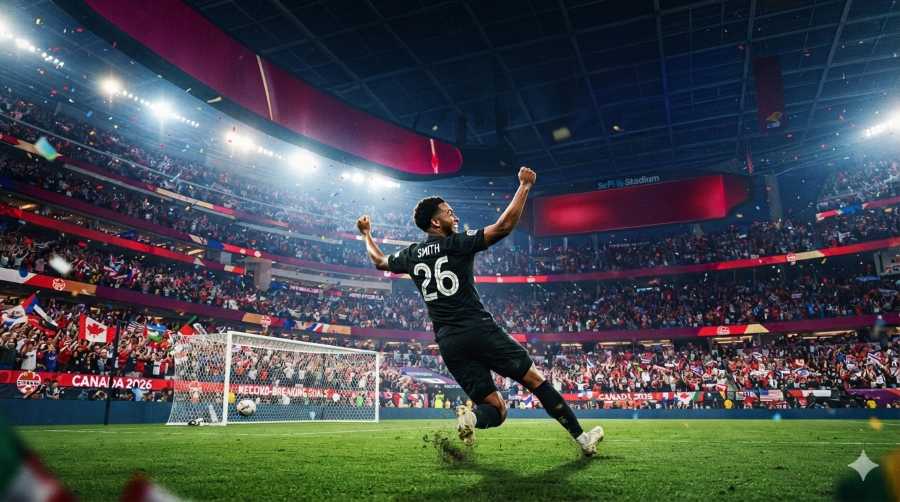
World Cup 2026 Record has officially become the highest-scoring tournament in FIFA World Cup history. The historic moment came during the United States vs. Turkey Group D match when Auston Trusty scored the tournament’s 173rd goal, surpassing the previous record of 172 goals set at the 2022 FIFA World Cup in Qatar. Remarkably, the new record was achieved after just 59 matches, while the 2022 tournament needed all 64 matches to reach the same milestone.
The goals continued to flow after the record-breaking strike. Turkey defeated the United States 3–2, adding four more goals and pushing the tournament total to 177 goals before the group stage had even concluded. Football experts believe the expanded 48-team format, combined with more attacking tactics and high-intensity football, has played a major role in this historic achievement. With the knockout stage still to come, World Cup 2026 is expected to raise the all-time scoring record even further.
Previous FIFA World Cup Goal Record
Before World Cup 2026 Record , the highest-scoring FIFA World Cup was Qatar 2022, where 172 goals were scored in 64 matches. That tournament broke the previous record of 171 goals, which had been shared by France 1998 and Brazil 2014. The dramatic 2022 final between Argentina and France, which ended 3–3 after extra time, helped push the tournament to its record-breaking total.
For nearly four years, the 172-goal mark stood as the benchmark for attacking football at the FIFA World Cup. However, World Cup 2026 Record surpassed that total after only 59 matches, when Auston Trusty scored the tournament’s 173rd goal against Turkey. The record has continued to grow since then, proving that the 2026 edition has set a new standard for goal-scoring and entertainment in world football.
Why So Many Goals Are Being Scored
Several factors have contributed to the record-breaking number of goals at the 2026 FIFA World Cup. The expanded 48-team format has created more matches and introduced new attacking teams, while modern tactics such as high pressing, quick transitions, and aggressive wing play have generated more scoring opportunities. In addition, today’s forwards are more clinical, and teams are taking a more positive approach instead of focusing only on defense.
Another key reason is the increased intensity of modern football. Fast counterattacks, accurate cut-back crosses, and constant pressure have forced defenders into costly mistakes, leading to more goals and even a rise in own goals. Coaches also encourage players to attack throughout the match rather than protect narrow leads. As a result, World Cup 2026 Record has delivered exciting, high-scoring games and set a new benchmark for attacking football on the world’s biggest stage.
Teams Leading the Goal Charts
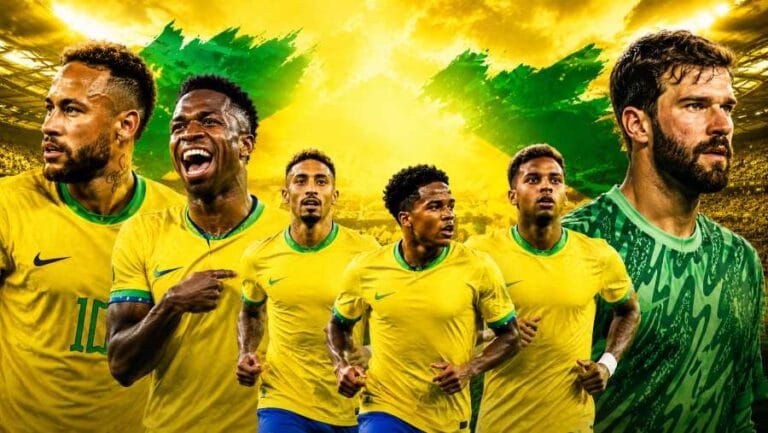
Several national teams have played a major role in the record-breaking goal tally at the 2026 FIFA World Cup. Germany made an early statement with a 7–1 victory over Curaçao, while the Netherlands scored freely on their way to winning Group F. Brazil also impressed with dominant wins over Haiti and Scotland, and Portugal strengthened its attacking reputation with a convincing 5–0 victory against Uzbekistan. These performances have helped push the tournament to a historic scoring record.
Consistency has separated the top attacking teams from the rest. Brazil finished the group stage unbeaten and scored in every match, while the Netherlands combined clinical finishing with disciplined team play to top their group. Germany created the biggest winning margin of the tournament so far, showing both efficiency and attacking depth. Portugal also remained among the most dangerous sides thanks to its balanced forward line and creative midfield.
The success of these teams goes beyond individual stars. Their goals have come from strikers, midfielders, defenders, and substitutes, proving the strength of their overall squad. Fast passing, high pressing, and effective counterattacks have made them difficult to stop. As the knockout stage begins, these consistent attacking teams are expected to remain strong contenders for both the FIFA World Cup title and the tournament’s top-scoring honors.
Top Scorers of World Cup 2026 Record
The race for the Golden Boot has become one of the biggest storylines of the tournament. Argentina captain Lionel Messi currently leads the scoring chart with five goals, strengthening his record as the highest scorer in FIFA World Cup history. Close behind him are France’s Kylian Mbappé and Norway’s Erling Haaland with four goals each. Germany’s Deniz Undav and Canada’s Jonathan David have also impressed with three goals, keeping the competition wide open.
The Golden Boot battle is expected to become even more intense as the knockout stage begins. Every goal could change the standings because the leading contenders are still active in the tournament. Messi’s experience, Mbappé’s pace, and Haaland’s clinical finishing make them the favorites to claim the award. However, one outstanding performance in the knockout rounds could quickly reshape the leaderboard and decide who finishes as the top scorer of World Cup 2026.
Most Entertaining Matches So Far World Cup 2026 Record
The 2026 FIFA World Cup has already delivered several unforgettable matches filled with goals and drama. Germany’s 7–1 victory over Curaçao remains the highest-scoring game of the tournament, showcasing the four-time champions’ attacking power. Another thrilling contest came when Morocco defeated Haiti 4–2, while Sweden’s 5–1 win over Tunisia highlighted the tournament’s goal-scoring trend. These matches have played a major role in helping the competition break the all-time World Cup scoring record.
Dramatic comebacks have made the tournament even more exciting. Germany recovered from a first-half deficit to beat Ivory Coast 2–1, thanks to a late double from Deniz Undav. Turkey also produced one of the most dramatic finishes by defeating the United States 3–2 with a stoppage-time winner after the Americans had taken an early lead. These thrilling encounters have kept fans on the edge of their seats and reinforced World Cup 2026 Record as one of the most entertaining tournaments in FIFA history.
Tactical Changes Behind the Goal Explosion
One of the biggest reasons behind the record number of goals is the rise of high pressing. Many teams now pressure opponents immediately after losing possession instead of dropping back into defense. This tactic forces mistakes in dangerous areas and creates quick scoring opportunities. As a result, attackers often receive the ball much closer to the opponent’s goal.
Another major factor is the use of fast transitions. Teams move the ball from defense to attack within seconds, catching opponents out of position. Creative midfielders and quick wingers have taken full advantage of these situations, leading to more clear-cut chances and higher conversion rates throughout the tournament.
Counterattacks have also become a powerful weapon in World Cup 2026 Record . Many teams defend with discipline before breaking forward at speed once they win possession. Fast forwards and overlapping full-backs have punished opponents who commit too many players in attack. These modern tactical approaches have played a key role in the tournament’s record-breaking goal total.
The Impact of Expanded 48-Team Format
The 2026 FIFA World Cup is the first edition to feature 48 teams, expanding the tournament from 64 to 104 matches. This new format has created more opportunities for nations from every continent to compete on football’s biggest stage. It has also increased the number of competitive fixtures, allowing more players and teams to showcase their attacking quality. As a result, the tournament surpassed the previous World Cup scoring record before the knockout stage even began.
The expanded format has encouraged a more attacking style of football. Several emerging nations have played with confidence instead of relying only on defense, producing open and entertaining matches. Traditional powerhouses have also continued to press forward rather than protect narrow leads, creating more chances and higher-scoring games. With additional knockout rounds still to come, the 48-team format is expected to produce even more goals and memorable moments before the tournament concludes.
Young Stars Lighting Up the Tournament
The 2026 FIFA World Cup has given young players a chance to shine on the biggest stage. Spain’s Lamine Yamal has been one of the standout performers, scoring in Spain’s 4–0 victory over Saudi Arabia and becoming one of the youngest goalscorers in FIFA World Cup history. Norway striker Erling Haaland has also enjoyed an outstanding tournament, while Germany’s Deniz Undav has emerged as one of the biggest surprise performers with crucial goals and assists for his team.
These rising stars have brought fresh energy and fearless attacking football to the tournament. Their pace, creativity, and confidence have helped their teams compete against experienced opponents. Young talents are no longer playing supporting roles—they are deciding important matches and becoming key figures in the race for the title. Their performances show that the future of international football is already here, making the 2026 FIFA World Cup even more exciting for fans around the world.
Defensive Weaknesses Behind the Goal Rush
Defensive mistakes have played a significant role in the record-breaking number of goals at the 2026 FIFA World Cup. Several teams have struggled with poor positioning, misplaced passes, and communication errors under intense pressure. High pressing has forced defenders into costly mistakes, while goalkeepers have also faced greater challenges. According to Reuters, defensive errors and own goals have increased noticeably compared with recent tournaments, contributing to the tournament’s historic goal tally.
Set-piece defending has also been a major weakness for many teams. Poor marking during corners and free kicks has allowed attackers to find space inside the penalty area and score crucial goals. Fast deliveries and well-rehearsed routines have punished disorganized defenses throughout the group stage. As the knockout rounds begin, coaches are expected to focus heavily on improving defensive organization and set-piece marking to avoid costly mistakes in high-pressure matches.
The Impact of Expanded 48-Team Format World Cup 2026 Record
The expanded 48-team format has transformed the 2026 FIFA World Cup into the biggest tournament in history. FIFA increased the competition from 32 teams and 64 matches to 48 teams and 104 matches, giving more nations the opportunity to compete on football’s biggest stage. The additional fixtures have created more chances for goals, helping the tournament break the previous World Cup scoring record before the knockout stage even began.
The new format has also encouraged more attacking football. Emerging nations have played with confidence instead of sitting back in defense, while traditional powerhouses have continued to press forward throughout matches. This fearless approach has produced exciting contests, dramatic scorelines, and a record number of goals. With the Round of 32 and the remaining knockout rounds still to come, the expanded tournament is expected to deliver even more memorable moments and further increase the all-time goal tally.
Most Memorable Hat-Tricks
Hat-tricks have always been among the most unforgettable moments in FIFA World Cup history, and World Cup 2026 Record has already produced one for the record books. Lionel Messi scored the tournament’s first hat-trick in Argentina’s 3–0 victory over Algeria, becoming the oldest player ever to record a World Cup hat-trick at 38 years and 357 days. It was also the first World Cup hat-trick of his legendary career, adding another milestone to his remarkable legacy.
Messi’s historic performance immediately became one of the defining moments of the tournament. His three goals not only guided Argentina to a comfortable win but also moved him to the top of the Golden Boot race and extended his FIFA World Cup scoring record. Football analysts praised his vision, composure, and finishing, describing the performance as another reminder of his lasting influence on the world’s biggest stage.
Best Attacking Partnerships
The 2026 FIFA World Cup has showcased several outstanding attacking partnerships. Argentina’s Lionel Messi and Julián Álvarez have once again demonstrated excellent chemistry, combining intelligent movement with precise passing to create crucial goals. For France, Kylian Mbappé and Ousmane Dembélé have formed a dangerous duo, using their pace and creativity to trouble defenders throughout the group stage. Norway’s Erling Haaland and Martin Ødegaard have also impressed, with Ødegaard’s vision creating multiple chances for Haaland to finish.
Strong partnerships are built on more than just goals. Accurate assists, quick one-two passes, and smart positioning have become key weapons for the tournament’s best attacking teams. Brazil’s Vinícius Júnior and Bruno Guimarães also produced an impressive combination against Scotland, with Guimarães providing two assists and Vinícius scoring twice. These partnerships have made attacks more unpredictable and have played a major role in the record-breaking number of goals at the 2026 FIFA World Cup.